Malaysia’s students are showing progress in Science and Reading, but Mathematics remains a major weak spot, prompting the Education Ministry to introduce a new plan to turn things around.
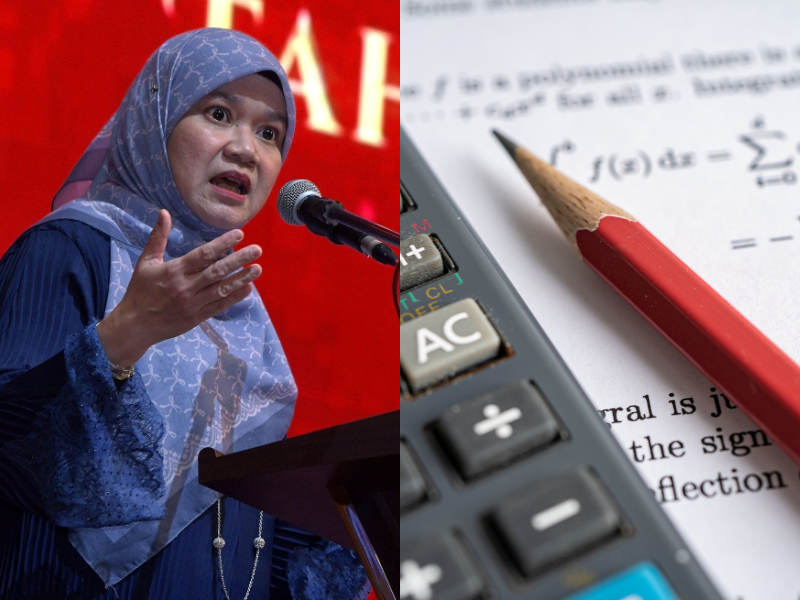
Education Minister Datuk Seri Fadhlina Sidek said the latest PISA results showed that the decline in Mathematics could no longer be dismissed as a temporary fluctuation. Instead, she said students need to go beyond memorising knowledge and be able to use what they learn when faced with unfamiliar problems.
The ministry has since rolled out the Mathematics Education Transformation Plan (RTPM), which focuses on strengthening students’ understanding of mathematical concepts, reasoning and problem-solving skills.
Science and Reading show brighter results
The Mathematics results may have raised concerns, but Malaysia did see improvements in two other areas.
Science literacy increased to 419, three points higher than in PISA 2022, while Reading literacy went up five points to 393. Fadhlina described the results as encouraging, particularly because the average scores across OECD countries declined in both areas.
Malaysia also scored 484 in Computational Problem Solving, compared with the OECD benchmark of 500. The assessment looked at how well students could break complicated problems into smaller parts, identify patterns and relevant information, and develop steps to reach a solution.
PISA 2025 also found Malaysian students to be increasingly curious and resilient, with a growing ability to manage their own learning.
Teachers remain a bright spot
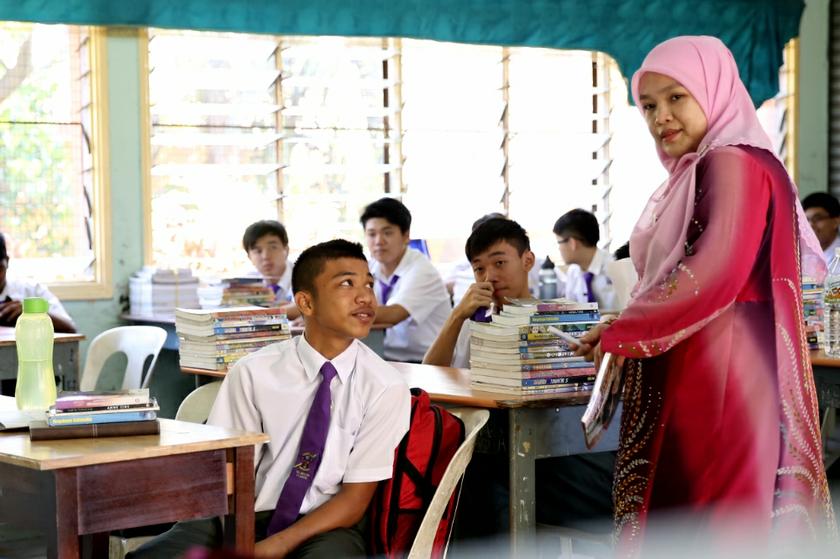
One area where Malaysian students reported strong support was their relationship with teachers.
PISA found that:
- 91% said teachers helped with their learning.
- 87% said teachers continued teaching until they understood.
- 86% said they received additional help when needed.
- 83% said they were given opportunities to express their opinions.
- 80% said teachers showed interest in their learning.
These positive teacher-student interactions were highlighted as an important strength in Malaysia’s education system.
Parents also need to step up

Outside the classroom, however, fewer students said they were regularly discussing their education with their parents. Only 34% said they talked about school issues with their parents every week, compared with 46% in 2022. For discussions about school activities, the figure fell from 57% to 51%.
Fadhlina urged parents to become more actively involved in their children’s learning instead of leaving education entirely to schools and teachers.
Cyberbullying is another concern
The PISA results also highlighted an issue beyond academic performance.
Around 5% of Malaysian students said they had experienced cyberbullying. Students who experience cyberbullying generally tend to perform worse academically, making it another area that requires attention.
PISA 2025 was conducted from 22 April to 30 May last year, involving 7,624 15-year-old students from 157 schools and educational institutions across Malaysia. With the mixed results, Educational Policy Planning and Research Division director Datin Rosliza Rosli said Malaysia’s future education strategy should take a “whole-nation approach”, bringing parents, schools and other stakeholders together to support students.
For now, Mathematics appears to be the biggest challenge on the table, and the Education Ministry says it can no longer be ignored.
Follow Wah Piang for more