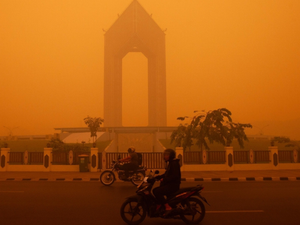
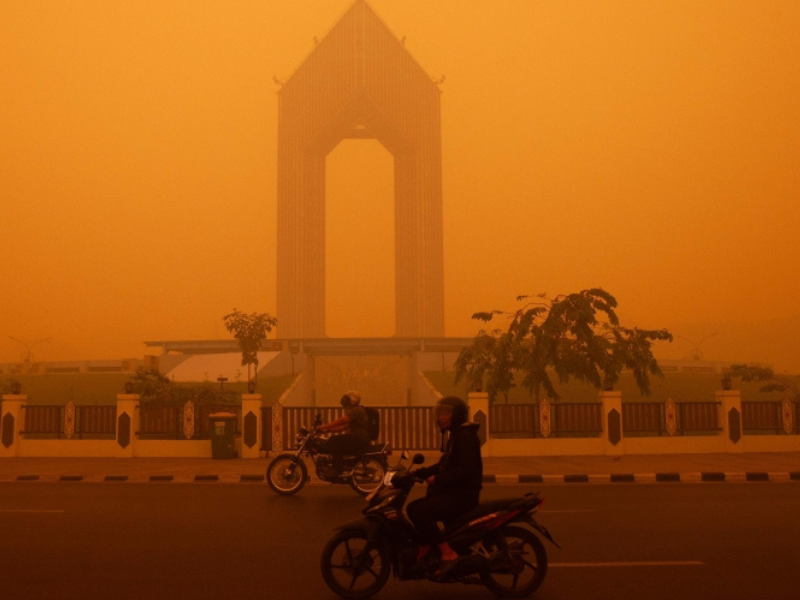
Indonesia has agreed to accept assistance from neighbouring countries, including Malaysia, as worsening forest and land fires continue to spread hazardous haze across Southeast Asia.
According to Indonesian media reports, Foreign Minister Sugiono said on Thursday that President Prabowo Subianto had approved the offer of foreign assistance. Technical discussions are now underway, with Indonesia’s National Disaster Management Agency (BNPB) coordinating the arrangements.
Malaysia had previously offered to help tackle the fires. On 18 September, Deputy Prime Minister Datuk Seri Ahmad Zahid Hamidi reportedly proposed sending one aircraft, three helicopters and 52 firefighters during a meeting with Prabowo in Hambalang, West Java.
Indonesia tries experimental dry ice method to tackle haze
With fires continuing to burn across forests and peatlands, Indonesia has also begun experimenting with an unconventional way to disperse the haze.
On Thursday, authorities deployed aircraft to release 1.5 tonnes of dry ice over badly affected areas in South Sumatra. According to the BBC, the experiment is intended to break up low-level haze and help it rise to higher altitudes, rather than trigger rainfall.
Coordinating Minister for Political and Security Affairs Djamari Chaniago said the method could be introduced in other severely affected areas, including Central Kalimantan, if the trial proves successful.
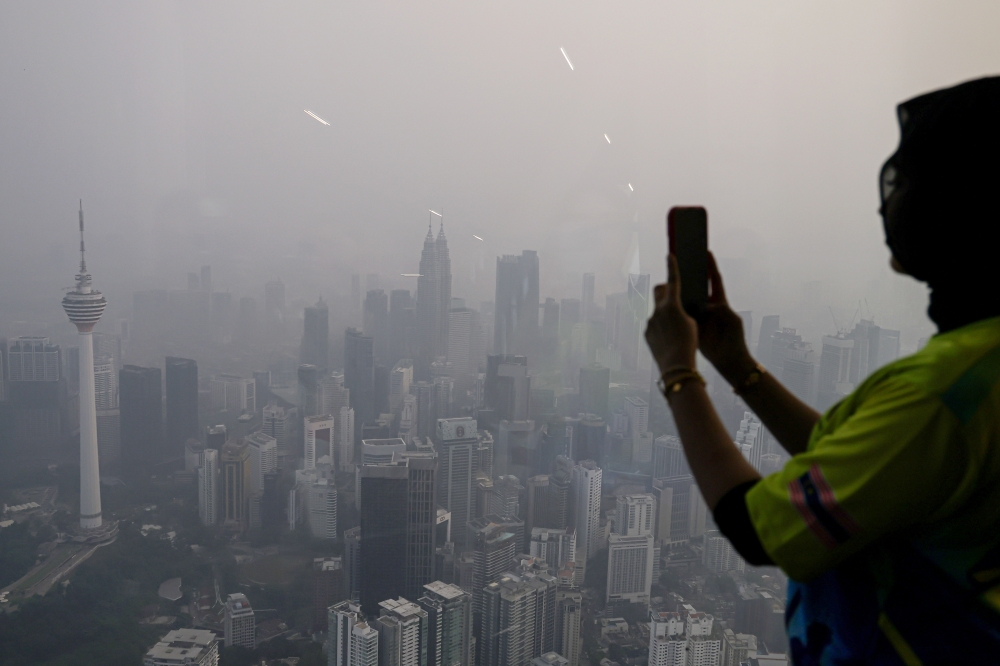
The fires have been burning for months, contributing to a sharp increase in respiratory illnesses and sending hazardous haze across several Southeast Asian countries. Malaysia and Singapore have also experienced severe haze over the past week. Indonesia has deployed more than 60,000 personnel to fight the fires, alongside around 50 aircraft conducting water-bombing and cloud-seeding operations.
Authorities step up prevention and enforcement
Beyond firefighting, the Indonesian government plans to recruit more forest rangers to prevent future outbreaks and restore damaged peatland ecosystems. Peat fires are particularly difficult to extinguish because they can smoulder underground for extended periods, even after surface flames have disappeared.
Authorities have also pledged to crack down on companies suspected of illegal activities and restrict the use of burning to clear agricultural land. Police said 223 individuals and nine companies could face legal action over suspected involvement in causing forest fires. Despite these measures, officials warned that sustained rainfall would be needed to bring the blazes under control.
Indonesia typically enters its rainy season in October, but forecasts suggest this year’s rains could be delayed until November. The country’s meteorological agency said El Niño conditions were expected to persist into the first quarter of 2027, although the arrival of the rainy season should help reduce the impact of the fires.
Burned area estimates vary widely
The scale of the damage remains uncertain, with different organisations reporting significantly different estimates of the land affected.
Indonesia’s official figures have not been updated since July, when the government reported that approximately 202,000 hectares had been burned. Environmental organisation Auriga estimated that more than 637,000 hectares had been affected between January and August, while independent forest-monitoring platform Nusantara Atlas put the figure at nearly 900,000 hectares.
Data from the European Union’s Copernicus Atmosphere Monitoring Service showed that Indonesia recorded the world’s highest wildfire emissions over the past month. Its emissions over the past seven days accounted for nearly half of the global total.
Air pollution readings in parts of Borneo and Sumatra have reportedly exceeded 1,000. An air pollution index reading of 300 or above is generally considered hazardous, highlighting the severity of the ongoing crisis.
Follow Wah Piang for more