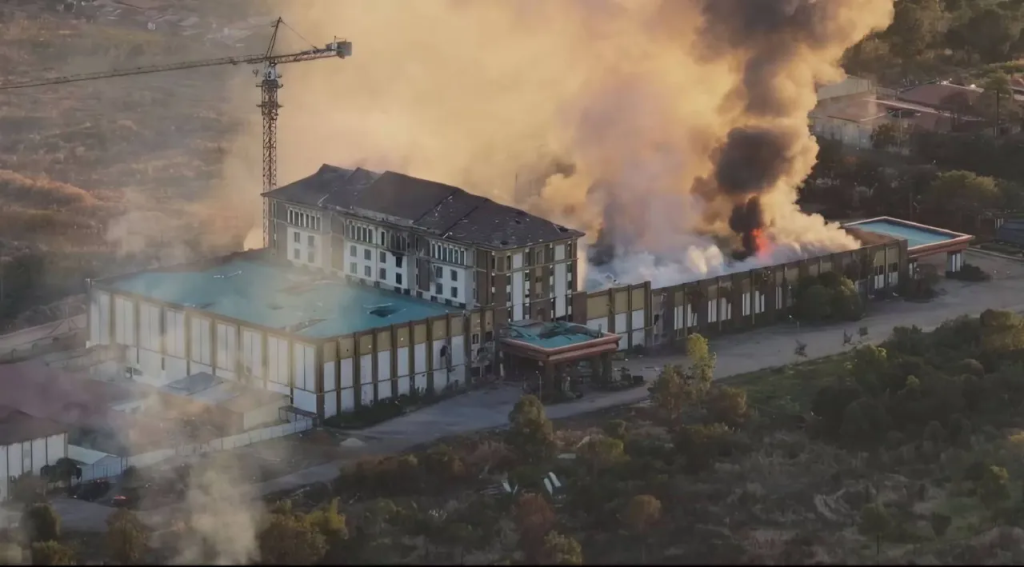
Image credit: Royal Thai Armed Forces
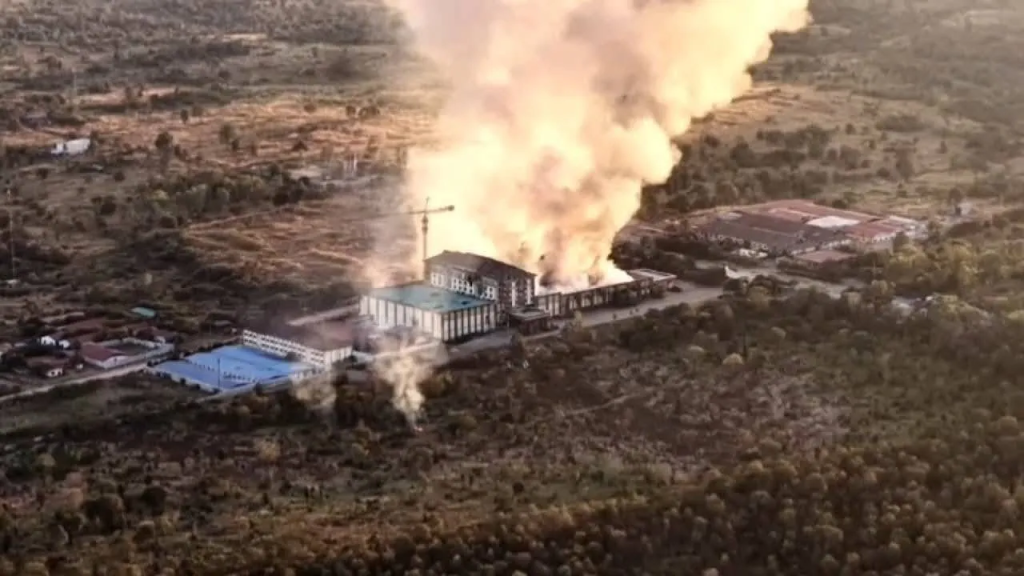
The Thai military confirmed on Thursday (December 18) that as of Sunday (December 14), it had successfully destroyed and bombed six buildings inside Cambodia used by transnational scam syndicates. These included two casino hotels and large resort complexes that are under US sanctions.
As reported by Thailand’s Channel 7, the Thai military conducted operations in border areas near Cambodia, identifying multiple scam syndicate strongholds and carrying out precision strikes.
According to military reports dated December 18, 2025, the operations—which concluded around December 14—targeted scam facilities responsible for defrauding thousands of victims globally. Military sources said that among the six destroyed buildings were two high-value targets: a large resort and a casino hotel.
Thai officials highlighted that at least two of the destroyed primary targets were a resort and a casino hotel already under U.S. financial sanctions. The owners of these properties had previously seen their assets seized by Washington for their long-standing involvement in sophisticated fraud schemes targeting American citizens.
Thailand: “Not escalating the war, but uprooting scammer networks”
The Thai military stressed that the actions taken by the government and armed forces are not intended to escalate the Thai-Cambodia conflict, but to cut off the roots of transnational crime and protect people worldwide from online scam syndicates.
In a bold assessment of the diplomatic landscape by multiple Thai news sources including Thairath, Thailand claims that this explains why many countries including the United States, despite calling for a ceasefire, have taken no concrete action against Thailand, including the US’s seemingly courteous stance as a supporter of peace. In reality, what the Thai government and military are doing is not escalating the war, but rather cutting the roots of transnational crime and helping protect people worldwide from scammer networks.
Anutin: “If it involves scams, it must be dealt with”
Anutin made the remarks while attending a dinner on Wednesday for the “Global Partnership Against Cybercrime” international conference. He noted that Cambodia did not send representatives to the meeting, while countries such as China, Myanmar and Rwanda placed strong emphasis on the issue of online scams.
Addressing speculation linking recent military actions to anti-scam operations, Anutin said that based on the information he had, the Thai military did not carry out airstrikes targeting casinos along the Cambodian border. He reiterated that casinos themselves fall outside Thailand’s jurisdiction, but if there is evidence that such facilities are being used by criminal groups as centres for scams or cross-border crime, Thailand would treat this as a security issue that “must be addressed”.
Anutin also mentioned that many countries sent officials to the International Conference on the Global Partnership against Online Scams held in Bangkok on December 17-18, demonstrating the high level of concern shared by participating nations.
He added that China expressed appreciation for Thailand’s recent extradition of several serious criminal suspects, describing the move as an example of effective international judicial cooperation. “Transnational criminals should not become a burden to any country. They should be returned to their country of origin to be dealt with according to the law, allowing for more thorough investigations,” he said.
Tense situation has been going on for almost 2 weeks
The fighting has been going on daily since December 7.
Both sides blamed each other for triggering the clashes, insisting their actions were taken in self-defence and accusing the other of targeting civilians.
US President Donald Trump’s ceasefire announcement on Friday (December 12) drew a muted response from leaders on both sides.
Follow Wah Piang for more.