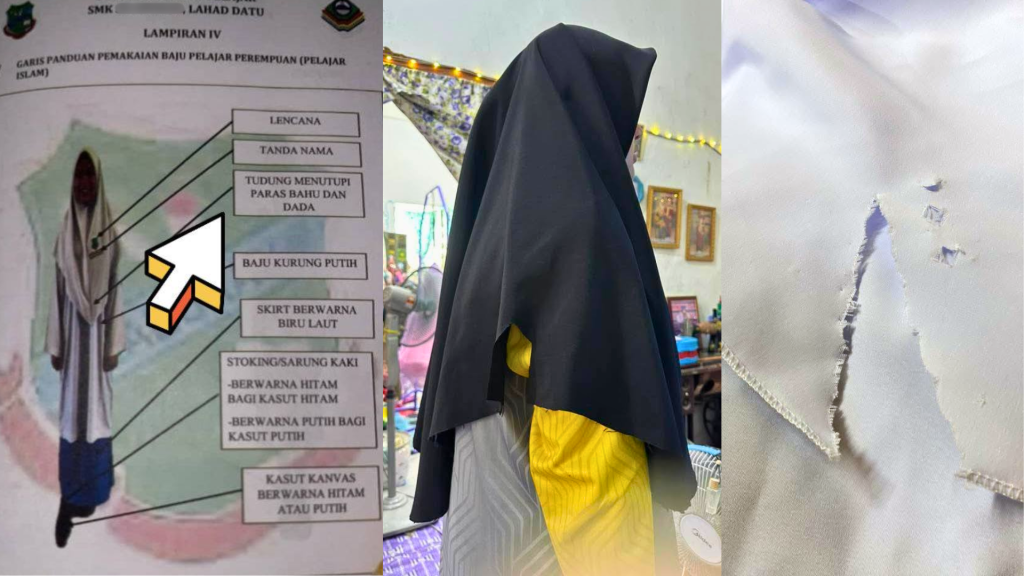
A controversy has emerged involving a secondary school in Lahad Datu, Sabah, after allegations surfaced that female students’ headscarves were damaged by a disciplinary teacher during the first week of the 2026 school session.
The issue was highlighted by an activist who shared excerpts from the official school rulebook of the Lahad Datu school. According to the school’s uniform regulations, female students are required to wear headscarves that cover the shoulders and chest.
Students’ headscarves appear to fit the school rule book requirements
The rulebook does not specify additional requirements beyond this description. Comparisons shared between the written regulation and photos of the affected students’ headscarves showed that the scarves complied fully with the stated rules.
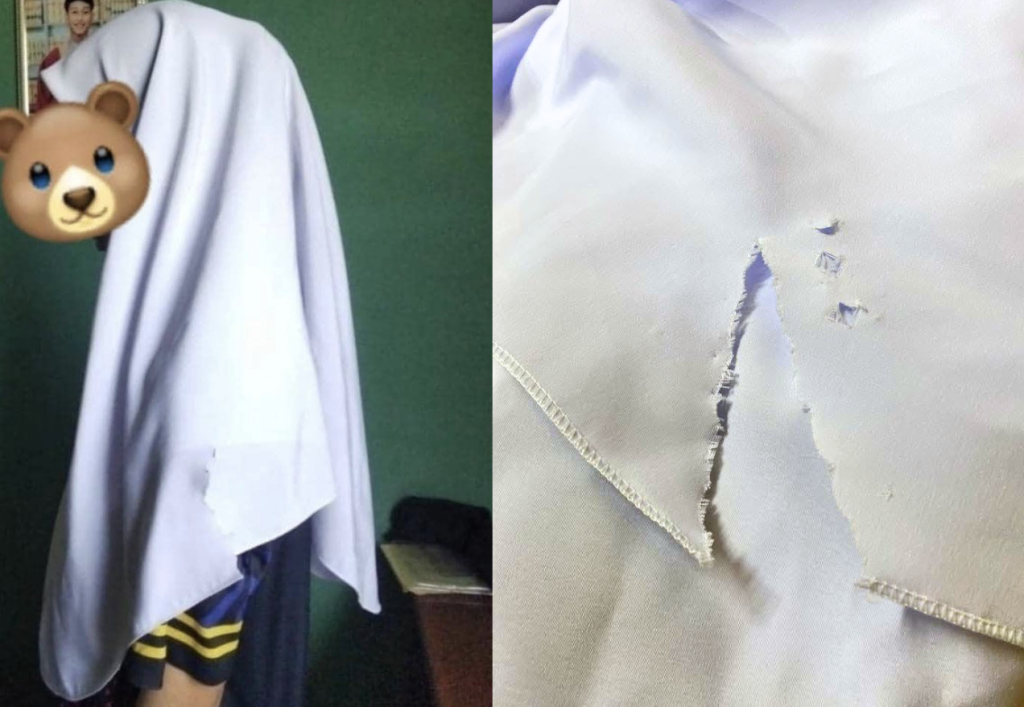
Despite this, several students reportedly had their headscarves damaged during disciplinary action carried out in the first week of the new school term. The action allegedly affected students from different year levels. Some students also claimed that others wearing similar headscarves were not subjected to the same treatment, raising concerns over inconsistent enforcement.
Disciplinary teacher is allegedly also a religious teacher
The disciplinary action was reportedly carried out by a discipline teacher who is also described as holding the title of ustazah. The school involved is a regular national secondary school (SMK) and not a religious institution, prompting further questions about the justification for the action taken.
Parents of affected students later voiced their concerns through the parents’ group chat, sharing their experiences and expressing distress over the incident. However, it was alleged that after parents began speaking out, messaging in the group chat was restricted to administrators only, limiting further public feedback.
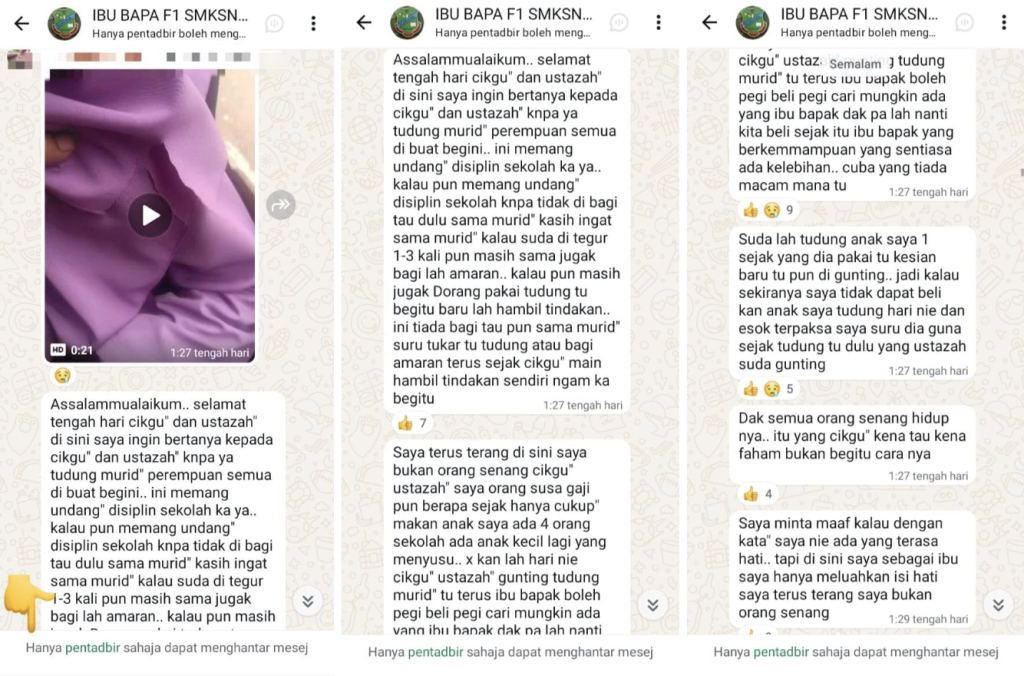
The individual who raised the issue said more screenshots of class group chats had been shared privately but chose to release only a portion publicly for now. The incident has since sparked broader discussion on students’ rights, parental voice, and the appropriate limits of disciplinary authority in schools.
The matter has prompted calls for schools to reflect on their disciplinary practices, with emphasis on education over punishment and the need for professionalism, fairness, and restraint when dealing with students.
Follow Wah Piang for more.