A Malaysian recently shared a personal reflection on how avoiding the Malay language throughout his school years eventually caught up with him in adult life.
M’sian man regrets not being able to pick up Bahasa Malaysia
In a Facebook post, Vincent Tan recalled that he studied at a Chinese primary school and, for reasons he still cannot fully explain, whether due to language ability or his surroundings, he developed an instinctive resistance to Malay from a young age.

Image credits: Vincent Tan (Facebook)
Recounting his experience, he mentioned that Malay lessons in school made him anxious. He skipped homework, failed exams, and while he managed to pass every other subject, Malay was always his “fatal weakness.” Concerned, his family spent money sending him for tuition, but no matter how much extra help he received, nothing seemed to work.
At the time, Vincent believed this was simply an obstacle he would never overcome.
Avoidance is not the solution
Determined to avoid the language, he later chose to attend a Chinese independent high school, where there was only one Malay class. He coped by memorising what he could just to pick up extra marks. When exams came around and it was time to sit for the Malay language paper in the SPM examination, he admitted that he answered the questions randomly, as he could not understand them.
Being made aware that all local institutions including private universities, require the Malay language, Vincent even considered studying in Taiwan to completely escape Malay language exams. However, after various considerations, he still chose to continue his studies here.

After avoiding the language for much of his life, it wasn’t until he entered the workforce that the real consequences finally became clear.
He realised he struggled to communicate. Many of his colleagues were Malays, ordering food often meant interacting in Malay, and government offices operated almost entirely in the national language.
” As Malay is Malaysia’s official language, most documents are written primarily in Malay, with English translations provided only as an added extra, not a given.”
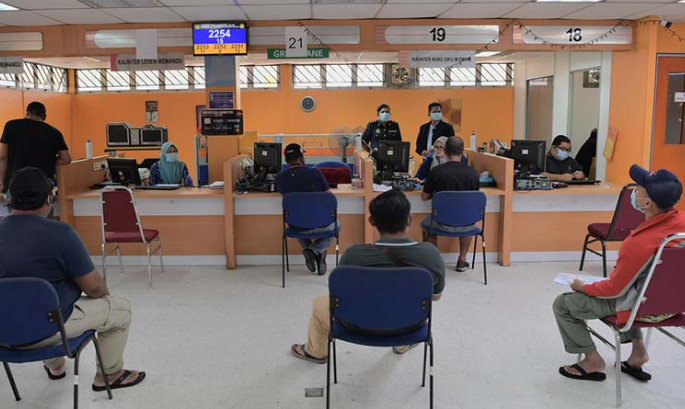
Image credits: FMT
It’s our national language, we should embrace it not avoid it
Later, when he started his own business, the issue became even more apparent. Handling administrative matters, reviewing documents, and managing procedures became challenging, and because his Malay was weak, he often had to rely on runners or agents to assist him.
Looking back, Vincent admitted he deeply regrets spending so many years avoiding the language. He regrets not putting in the effort to learn it properly, and more importantly, he regrets that no one truly made him understand just how important Malay would be in his life. Emphasizing that Malaysia is a multicultural country, it is important for us to learn Malay as it is our national language.
“To be able to communicate with each other, there must be a common language, and in our case as Malaysians, it’s Malay”, he said.
Follow Wah Piang for more.
Got something interesting to share? Email us at [email protected]!