Image credit: BERNAMA
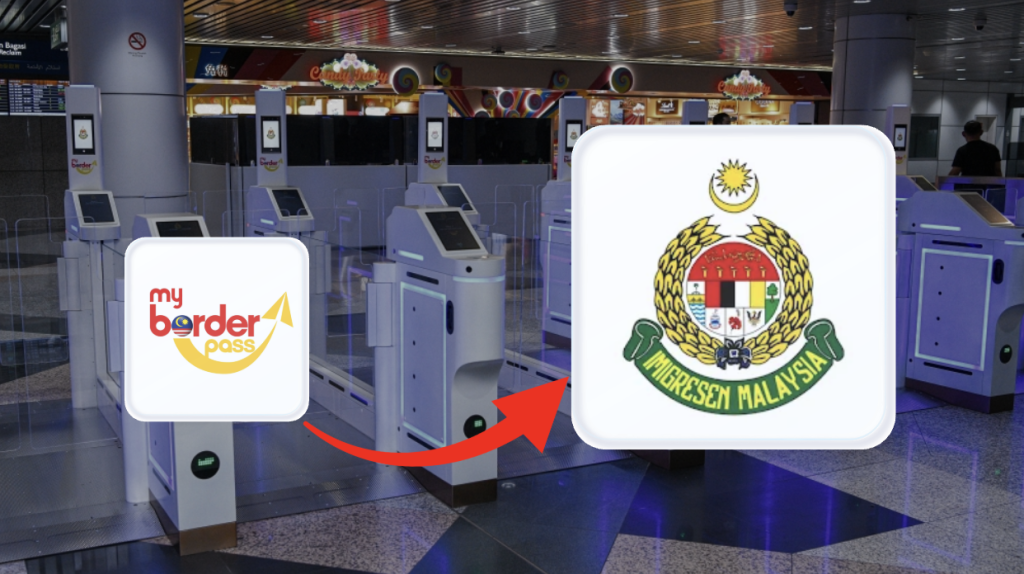
The MyBorderPass app used by Malaysians for immigration clearance is set to be replaced by the MyNIISe (National Integrated Immigration System) app in 2026, as the Home Ministry moves to consolidate immigration services under a single digital platform.
MyDigital ID required for MyNIISe app login
Beginning January 15, 2026, MyDigital ID will become the sole login method for Malaysians using the MyNIISe app (pronounced as “my nice”), marking a major shift in how citizens access immigration services. Foreign travellers, however, will continue using existing login methods, with no changes to their current process.
According to the Home Ministry, the move is part of the wider NIISe initiative, which aims to modernise Malaysia’s immigration system by enabling accurate and secure identity verification through the National Registration Department (JPN) database — without storing users’ personal data. The project will ultimately replace the long-running Malaysian Immigration System (MyIMMs), which has been in use for over two decades.
“This approach enhances the security of digital transactions while improving the user experience through a single login,” the ministry said, adding that Malaysians aged 18 and above are encouraged to register for MyDigital ID ahead of MyNIISe’s full rollout.
MyBorderPass still usable for now during trial phase
The MyNIISe app was introduced on September 22, 2025, and is currently undergoing a trial period until February 28, 2026 at two major land checkpoints — the Sultan Iskandar Building (BIS) and the Sultan Abu Bakar Complex (KSAB) in Johor Bahru.
During this trial phase, travellers can still use the existing QR code system and the MyBorderPass app. However, once the trial concludes, the new app is expected to fully replace MyBorderPass as the primary immigration clearance app for Malaysians.
Following the Johor pilot, MyNIISe will be rolled out in stages to Kuala Lumpur International Airport (KLIA) Terminals 1 and 2, as well as airports in Bayan Lepas, Kuching, and Kota Kinabalu.
As of December 30, 2025, the app has recorded 599,967 downloads and 287,258 registered users, reflecting growing adoption ahead of its nationwide implementation.
What makes MyNIISe different from MyBorderPass?
While MyBorderPass is designed exclusively for Malaysians, MyNIISe serves both Malaysians and travellers from 63 selected countries, allowing them to use autogate facilities for faster immigration clearance. Foreign visitors using MyNIISe are required to complete a digital arrival card within the app before arrival.
MyNIISe also introduces several functional upgrades over MyBorderPass. For group travel, only one QR code is required to pass through immigration checkpoints, compared to MyBorderPass, which requires each individual QR code to be scanned separately.
In addition, MyNIISe supports a wider range of travellers and vehicles. Users travelling by car, bus, lorry, or motorcycle can use the app at checkpoints, whereas MyBorderPass is limited mainly to bus passengers, motorcyclists, and travellers passing through KLIA.
One app for all immigration matters
At its core, MyNIISe is designed as a single, integrated platform for immigration affairs, reducing fragmentation across multiple systems and apps. With MyDigital ID serving as the main authentication method for Malaysians from 2026 onwards, the government aims to streamline border clearance while enhancing digital security.
As Malaysia transitions towards a fully digital immigration ecosystem, travellers can expect MyNIISe to gradually replace MyBorderPass — signalling the end of one app and the beginning of a more unified border clearance experience in 2026.
Download MyNIISe app
The MyDigital ID app is available on the Google Play Store, Apple App Store, and Huawei AppGallery. Meanwhile, the MyNIISe app can also be downloaded from the same platforms ahead of its full nationwide rollout.
Follow Wah Piang for more.