Image credit: Health Ministry Facebook, Science Photo Library
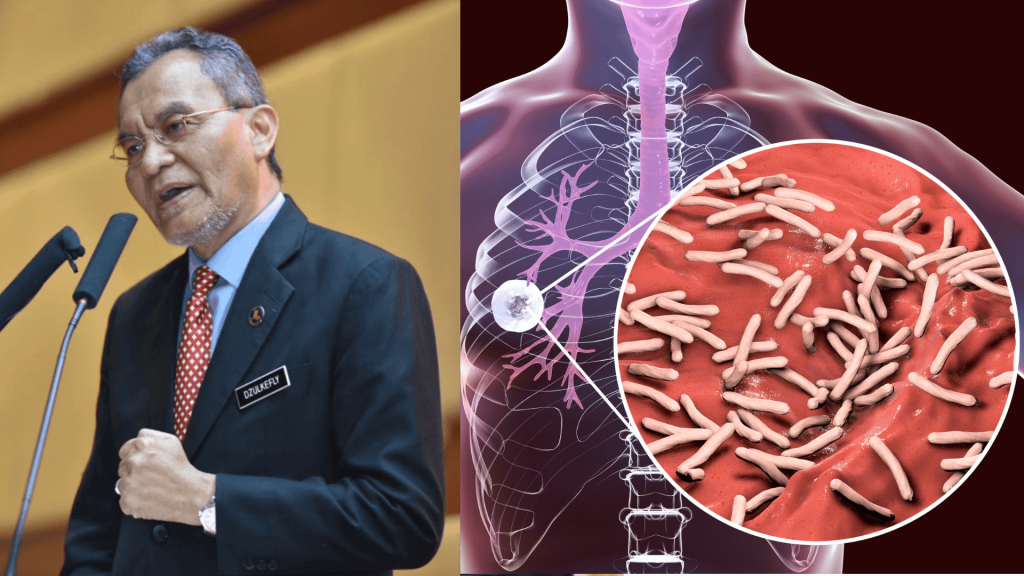
Health Minister Datuk Seri Dr Dzulkefly Ahmad has dismissed allegations that the recent rise in tuberculosis (TB) cases is linked to the presence of foreign nationals in the country.
He said data from the Health Ministry indicates that 85 per cent of TB cases involve Malaysians, while foreigners account for only 15 per cent.
“This shows that the risk of transmission within the community is genuine and must not be underestimated,” he said, adding that TB is not solely a medical concern but is also closely tied to socio-economic factors such as overcrowded living conditions and poor nutrition.
Cumulative total of 2,571 TB cases recorded as of Week 5
As of 16 Feb, 2,571 TB cases have been recorded. The breakdown is as follows:
- Sabah – 614 cases (highest)
- Selangor – 476 cases
- Sarawak – 257 cases
- Johor – 233 cases
- Kuala Lumpur & Putrajaya – 202 cases
- Penang – 148 cases
- Kedah – 144 cases
- Perak – 127 cases
- Kelantan – 96 cases
- Pahang – 81 cases
- Terengganu – 60 cases
- Negeri Sembilan – 58 cases
- Melaka – 42 cases
- Perlis – 17 cases
- Labuan – 16 cases
Source: Health Ministry
TB can be cured with early detection and 6 months dose of antibiotics
According to Bernama reports, Dzulkefly explained that while the Mycobacterium tuberculosis bacteria is highly resilient, TB can be prevented and cured if detected early and treated consistently with antibiotics for at least six months.
TB has always been endemic in Malaysia, but recorded an increase this year
He noted that TB is an endemic disease and not new to the medical field. The apparent rise in reported cases, he said, may be partly due to the ministry’s strengthened efforts in active case detection, contact tracing, and improvements to its notification system.
According to Dzulkefly, the ministry recorded a slight increase in TB cases this year, with an incidence rate of 9.2 per 100,000 population, compared to 8.4 per 100,000 the previous year.
“However, this increase should be interpreted cautiously,” he said.
He added that in 2024, the incidence rate stood at eight per 100,000 population, and a comparison between 2024 and 2025 shows the overall trend remains relatively stable, with only minor fluctuations.
“This indicates that the observed changes fall within normal epidemiological variations rather than pointing to an unusual spike,” he said.
Dzulkefly assured that the ministry will continue monitoring the situation and strengthening control measures, stressing that early detection and timely treatment are crucial to preventing further transmission.
“TB remains both preventable and treatable, and prompt medical intervention is key to limiting its spread,” he said.
Follow Wah Piang for more.