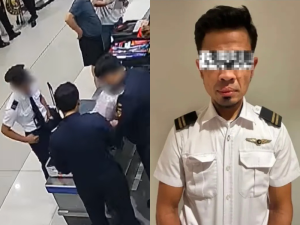
Questions are being raised over how a Malaysian pilot allegedly managed to bring more than 70,000 ecstasy pills from Kuala Lumpur to Indonesia after authorities confirmed he had gone through the required security checks at KLIA.
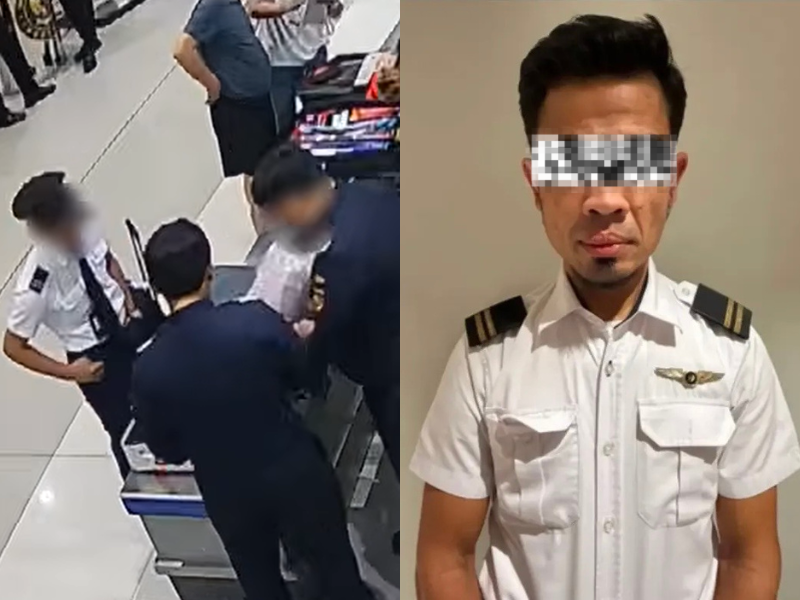
The 39-year-old pilot was arrested at Jakarta’s Soekarno-Hatta International Airport on July 30 after Indonesian customs officers allegedly found 14 bags containing more than 70,000 ecstasy tablets in his suitcase, along with 4g of methamphetamine in his hand luggage.
No suspicious image detected
Malaysian Border Control and Protection Agency (AKPS) director-general Mohd Shuhaily Mohd Zain said the pilot had undergone the required screening at KLIA before boarding his flight on July 28.
However, the scanner did not detect any suspicious images in his baggage.
He said the airport’s screening system uses a combination of AI technology and human assessment, with the scanner first assigning a risk level before officers decide whether further checks are needed.
“The system uses AI to a certain extent, but it is not like what people see on television. It still requires the operator’s judgment,” he said at a press conference at KLIA Terminal One on Aug 2.
Bag was not flagged for secondary screening
According to Shuhaily, the baggage did not receive a high-risk classification, so officers followed existing standard operating procedures and cleared it without conducting a secondary inspection.
He said it was possible the drugs had been concealed in a way that did not trigger the scanner, but stressed that police would determine exactly how the drugs managed to pass through the screening process.
A police officer from the Narcotics Crime Investigation Department is also expected to work with Indonesian authorities as investigations continue.
Carried drug free urine
Investigators also uncovered another alleged part of the pilot’s plan, a bottle of clean liquid believed to have been carried specifically to help him switch his urine sample if he was selected for a random drug test by airline or airport authorities.

The container was reportedly discovered during a detailed manual search of his luggage after his suitcase was flagged for inspection by Indonesian customs.
However, the alleged plan did not work. After his arrest, Indonesian authorities conducted a supervised urine test, meaning he could not switch the sample.
The test subsequently came back positive for methamphetamine, MDMA and cocaine, according to Indonesian authorities.
Pilot had no criminal record in Malaysia
Malaysian federal police said the pilot had no previous criminal record or history of drug-related offences in Malaysia.
However, Indonesian authorities said the pilot had allegedly admitted during joint questioning that this was not his first attempt to smuggle drugs into Indonesia.
He reportedly told investigators that he had previously used his flight crew status to carry drugs into Indonesia.
Could there have been an inside job?
Shuhaily also addressed speculation about possible “counter setting” or insider involvement.
He said AKPS would not compromise on integrity issues and that action would be taken if investigations found any of its officers were involved.
“If the police see there is foul play involved from my officers, then there will be no stone left unturned,” he said.
Authorities reviewing airport security
Following the pilot’s arrest, AKPS and other airport stakeholders held a joint meeting to review existing security protocols.
Shuhaily said the authorities were taking the case seriously and would look at improving the screening system and equipment once the investigation is completed.
Meanwhile, the Malaysian Embassy in Jakarta has been granted consular access to the pilot and has contacted his family.
The pilot is currently being detained at the Indonesian National Police Criminal Investigation Department’s detention facility in Jakarta as authorities prepare trafficking charges under Indonesia’s strict narcotics laws.
Follow Wah Piang for more.