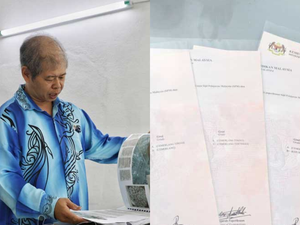
Most people would be happy to leave their school exams behind, but 51-year-old Tan Zong Ren (transliterated) has voluntarily sat for SPM Bahasa Melayu eight times, all to become a better teacher.
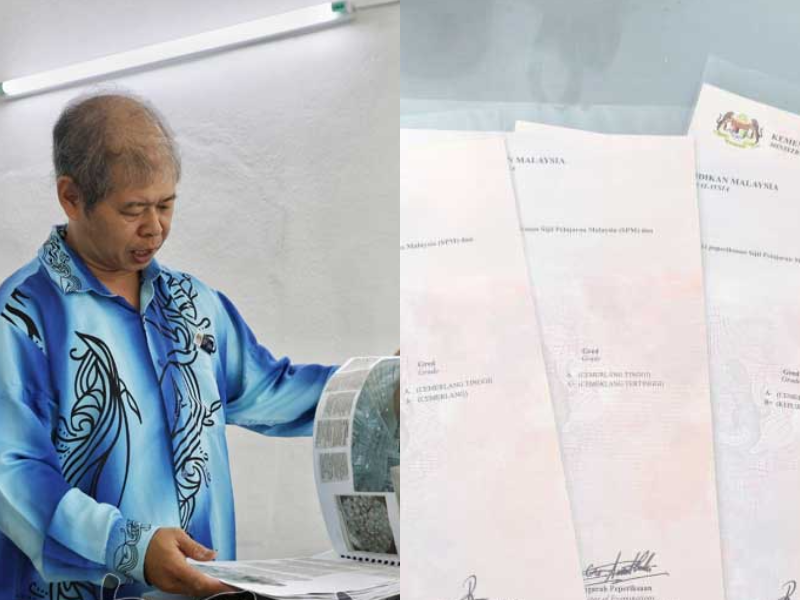
The Penang-based tutor has retaken the paper in 2017, 2018, 2019, 2020, 2022, 2024, 2025 and 2026, hoping to keep up with changing exam formats and help his students prepare more effectively.
But teaching is just one part of Tan’s story. He has also spent a decade researching and self-publishing two books on the history of Balik Pulau, helped community organisations write Malay letters for free, and pursued his love of Malay poetry.
From barely passing Malay to teaching it
Tan admitted that Malay was not always his strongest subject. His interest in the language grew when he was in Form Six and attended a lesson by a lecturer from Universiti Malaya at Han Chiang High School. Impressed by the lecturer’s clear, step-by-step teaching approach, Tan approached him after class to ask for extra lessons. He later brought several classmates along, with each student paying RM25 a month.
After two months of tuition, Tan sat for the exam again and achieved a C5, meeting the credit requirement at the time. His determination to improve was also shaped by an incident during primary school. Tan recalled getting every word correct in a Malay spelling test, only for his teacher to write “Pembetulan” in his book and punish him. While his classmates felt the punishment was unfair, Tan said he accepted it because he agreed with the teacher’s message: without confidence in oneself, even a perfect answer could mean nothing.
The experience encouraged him and his classmates to take Malay more seriously.
Tan eventually opened a tuition centre in 2001 and later focused on teaching Malay. He even tried conducting an entire lesson in the language to help students become more comfortable with it. However, one student mistakenly assumed he was Malay and withdrew from the class after just one lesson.
A student’s question he never forgot
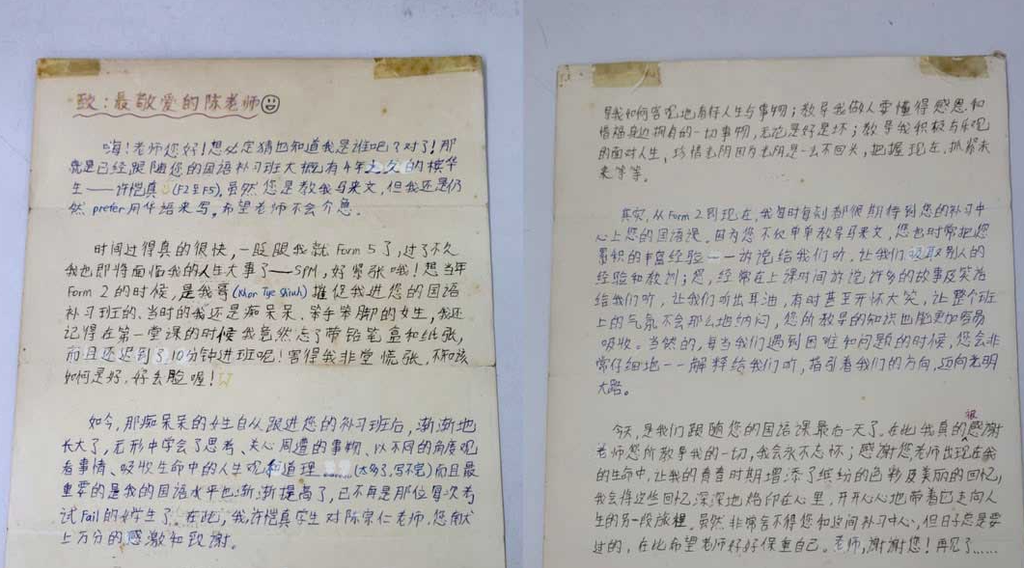
For Tan, teaching is about more than examination results. One former student’s experience continues to remind him how much education can mean to someone. He recalled visiting his student, Xu Kai Zhen, in the intensive care unit after she suffered a ruptured stomach and developed jaundice.
Despite being seriously ill, she whispered a question to him that left a lasting impression: “Teacher, can I still continue studying?”
Xu had already secured admission to Universiti Malaya’s Chinese Studies programme but was unable to enrol because of her condition. Her desire to pursue higher education was so strong that she reportedly even attended the university’s orientation activities secretly. Sadly, she passed away about a month later.
Tan said he had received many messages from students after they completed their studies, but Xu’s story remained particularly memorable. He reflected that education had once been one of the few ways for people to improve their circumstances. Although technology has given young people more choices today, he hopes they can still find a learning method that works for them.
His first career choice was actually the police force
Before becoming a tutor, Tan had dreamed of becoming a police inspector. He applied to join the police force twice, in 1997 and 2003, and said he passed the physical fitness tests and other assessments but was rejected both times because he did not meet the height requirement.
Tan also recalled how an instructor discovered his karate background and asked him to spar with another trainee. He said he fought so intensely that his opponent ended up in hospital.
Looking back, Tan joked that if he had become a police officer, he might never have written his two books about Balik Pulau. He eventually gave up the dream at the age of 31 and started a family. He later taught karate classes and coached students in the extracurricular activity at Chong Teik Primary School in Penang.
Helping others learn Malay, one letter at a time
Outside his tuition centre, Tan has also offered free help to community organisations and temples that need Malay letters written. He said an association once wanted to hire him as a clerk, but he declined because he preferred the freedom of working independently.
For Tan, helping people with correspondence is another way to encourage the use of Malay. Once someone receives a letter template, they can refer to it when preparing similar documents themselves and gradually learn the format. He believes charging for the service or turning it into a formal job could introduce restrictions that might prevent him from helping as freely.
His enthusiasm for the language also extends to poetry. Tan writes and recites Malay poems, and has coached pupils from Chong Teik Primary School for poetry recitation competitions. One pupil, he said, took part in a competition after only two lessons and eventually won second place.
Tan’s interest in poetry began during his school years, when a Malay teacher from a neighbouring class heard him reciting a poem and praised his voice, intonation and delivery. The teacher told him he had a natural aptitude for deklamasi sajak, or poetry recitation.
That encouragement stayed with him and helped nurture a lifelong interest.
Newspaper clippings become a record of local history
Tan’s passion for preserving knowledge can also be seen in his extensive newspaper collection.
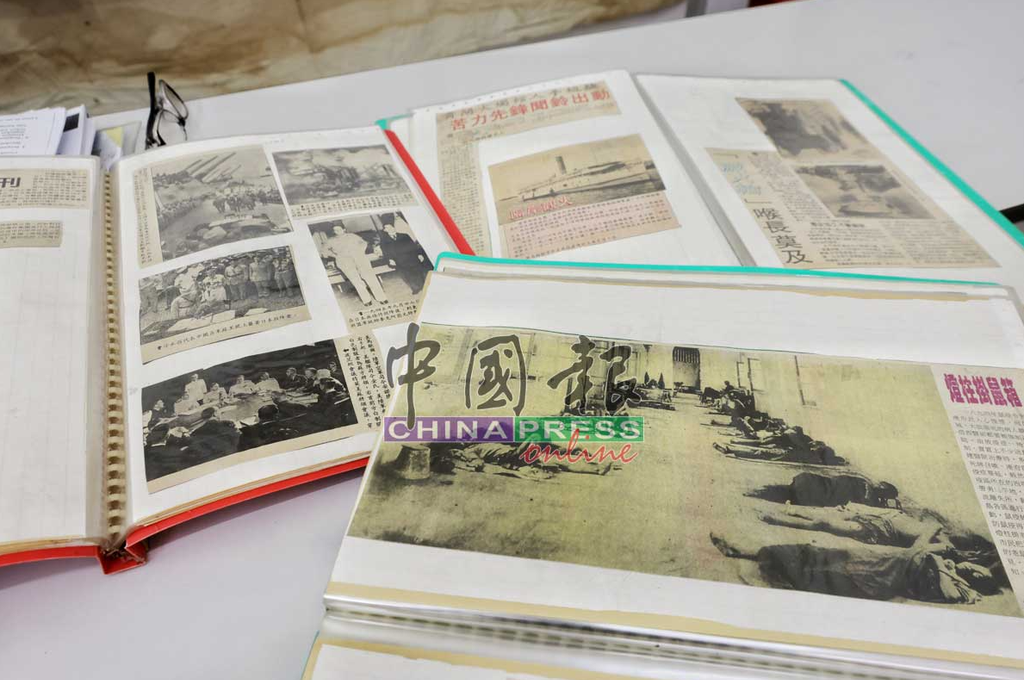
A longtime China Press reader, he has spent years collecting and organising clippings into 13 categories, including Balik Pulau’s history, historical documents, stamps, currency, archaeology, astronomy, UFOs, Bruce Lee and royal families. He particularly appreciates the newspaper’s print quality and layout, saying its photographs and details are useful for keeping historical records.
Tan believes newspaper archives offer an important snapshot of what happened in society at a particular time. Unlike online encyclopaedias, whose content can be edited, printed reports remain a record of what was published at the time. He has even held exhibitions of his collection at his tuition centre, with the UFO-themed clippings proving especially popular among students. His collection also became a valuable resource for researching Balik Pulau, eventually contributing to the two history books he spent 10 years producing at his own expense.
To mark China Press’ 80th anniversary, Tan presented two copies of his books to the newspaper as a gesture of congratulations.
From repeatedly sitting for an examination to preserving the history of his hometown, Tan’s journey reflects a commitment to learning that has continued well beyond the classroom.
Follow Wah Piang for more