A simple sign at a kuih stall in Melaka has sparked a discussion about the risks small sellers face when accepting cashless payments.
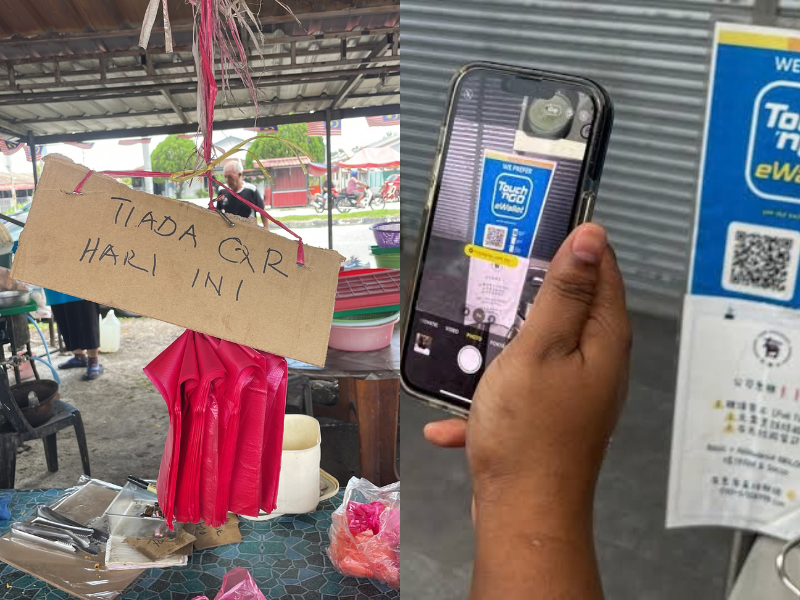
The sign, which read “Tiada QR Hari Ini” (No QR today), was spotted at a kuih stall near Klebang Restu by a Malaysian who recently shared the experience on Threads. The seller reportedly told the customer that she had stopped accepting QR payments because she had been cheated by customers who showed payment receipts that appeared genuine.
According to the post, some of the money shown as “paid” never actually reached her account, with the seller claiming that customers had edited their payment receipts. She also reportedly said that even the familiar payment notification sound could be replicated.

The experience prompted the person who shared the post to question why anyone would cheat an elderly kuih seller over small purchases, pointing out that small traders already have limited profit margins.
The allegation has not been independently verified, and it is unclear how many times the seller had reportedly experienced such incidents.
Netizens suggest safer ways to accept QR payments
The story quickly turned into a discussion about how small businesses can protect themselves from fake payment scams.
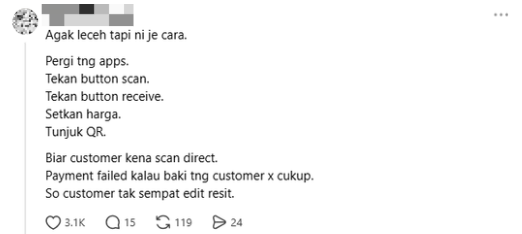
A commenter suggested that sellers should generate the payment request themselves by entering the exact amount into their banking or e-wallet app, rather than simply displaying a static QR code. This would allow customers to scan the seller-generated request and pay the exact amount.
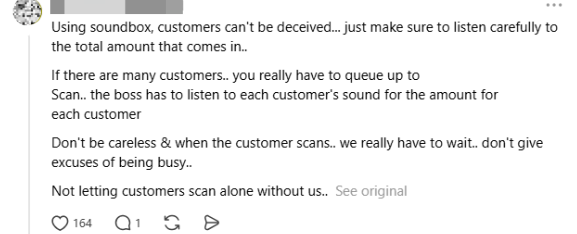
Another suggestion was to use a payment soundbox that announces successful transactions and the amount received. However, some commenters noted that sellers should still check their transaction records, particularly when dealing with a busy crowd, instead of relying solely on a sound or screenshot.
Others advised sellers to verify that the money has actually appeared in their own account before handing over the goods.
Several commenters also expressed sympathy for the elderly seller, noting that it may be difficult for small traders to keep track of banking notifications while simultaneously serving customers.
The incident has also highlighted a simple but important point for cashless transactions: a screenshot showing a successful payment does not necessarily mean the money has reached the seller.
Follow Wah Piang for more