Drivers on three selected stretches of the PLUS Highway and South Klang Valley Expressway (SKVE) will now see recommended minimum speeds displayed for each lane as part of a three-month trial aimed at reducing lane hogging and improving traffic flow.
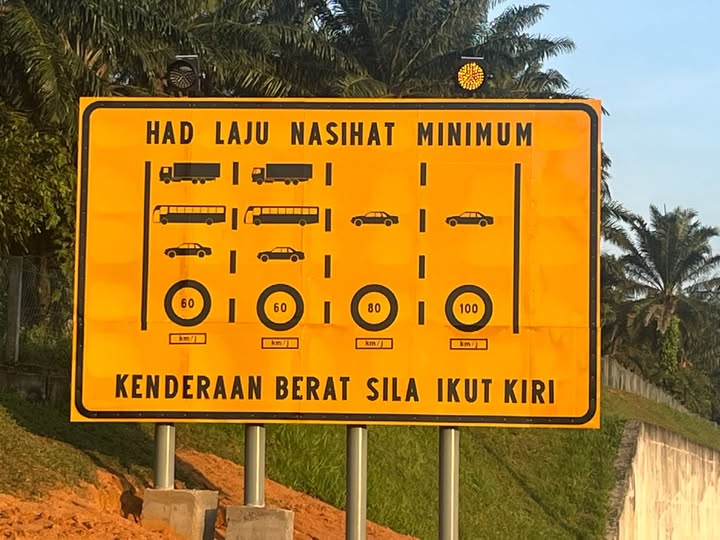
The Malaysian Institute of Road Safety Research (MIROS) launched the proof-of-concept trial on Aug 1 in collaboration with the Malaysian Highway Authority (LLM), PLUS Malaysia Berhad and SKVE Holdings. The trial will run until Oct 31, during which authorities will collect traffic data and public feedback to assess whether the system should be expanded to other highways.
Three highway stretches involved
The trial covers three selected stretches:
•PLUS E1 northbound from Tanjung Malim to Behrang
•PLUS E2 northbound from Bandar Ainsdale to Nilai
•SKVE E26 from the Ayer Hitam Toll Plaza to Bandar Saujana Putra
MIROS said the locations were selected based on factors including reports of sudden traffic congestion, the absence of entry and exit points within the stretches and the lack of AWAS cameras.
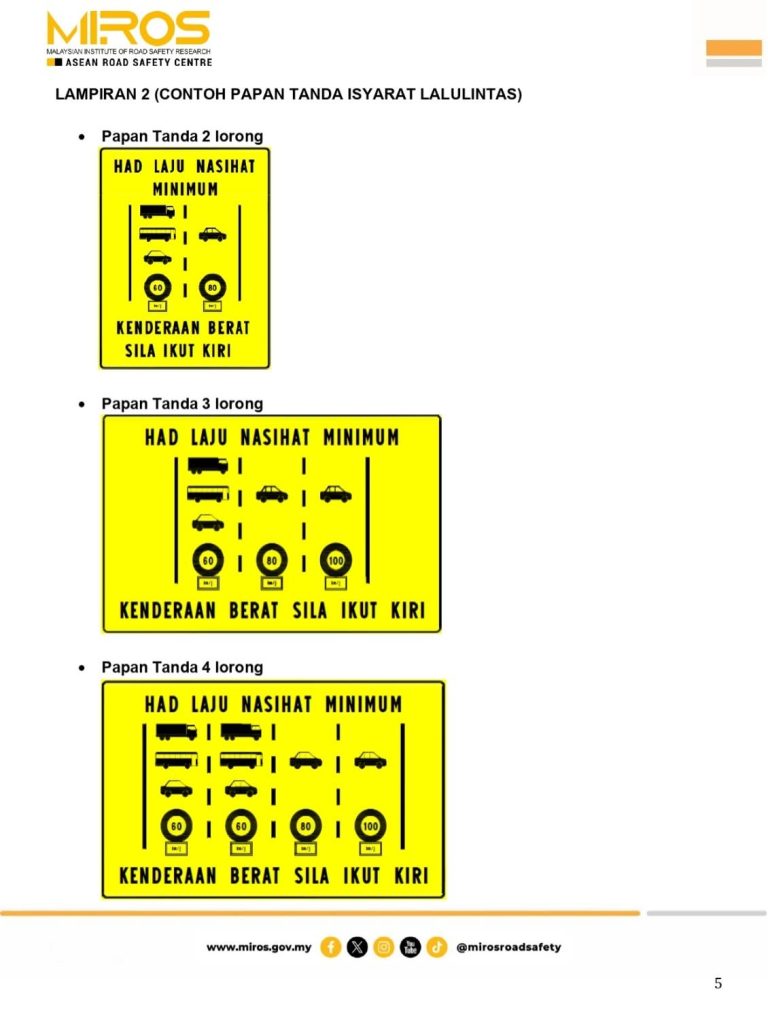
Recommended speeds will be displayed on overhead signboards according to the number of lanes available.
Right lane: 80km/h or 100km/h
On two-lane highways, the recommended minimum speed is 80km/h on the right lane and 60km/h on the left lane.
For three-lane stretches, drivers are advised to maintain at least 100km/h on the right lane, 80km/h in the middle and 60km/h on the left.
On four-lane stretches, the recommended speeds are 100km/h on the right, followed by 80km/h, 60km/h and 60km/h across the remaining lanes.
The idea is to encourage slower-moving vehicles to stay in the appropriate lanes instead of occupying the rightmost overtaking lane and holding up traffic.
Why are they doing this?
MIROS said slow-moving vehicles staying in the fast lane can cause vehicles behind them to brake suddenly or make risky lane changes to overtake.
Large differences in vehicle speeds can also contribute to sudden traffic slowdowns, commonly known as phantom traffic jams, while increasing the risk of collisions.
The trial therefore aims to encourage better lane discipline, reduce dangerous overtaking and keep traffic moving more smoothly.
No summons for breaking the advisory speed
But motorists don’t need to worry about getting a summons simply for driving below the newly displayed speeds.

MIROS stressed that the figures are advisory recommendations, not mandatory minimum speed limits during the trial. The existing maximum speed limits and vehicle-specific speed restrictions, including those for heavy vehicles, remain in force.
Drivers should also slow down whenever conditions are unsafe, such as during heavy rain, poor visibility, severe congestion, accidents or roadworks.
However, obstructing traffic in the right lane remains an offence under Malaysian road transport laws, and can carry compound fines of up to RM2,000.
The trial will continue until Oct 31, after which authorities will assess the data and feedback collected to determine whether the lane-based advisory speed system is effective and suitable for wider implementation.
Follow Wah Piang for more.