The Ministry of Investment, Trade and Industry (MITI) just dropped a bombshell that’s set to change the local car game: starting July 1, the door is officially closing on cheap imported EVs.
Here is the breakdown of what this means for your wallet and your next car purchase.
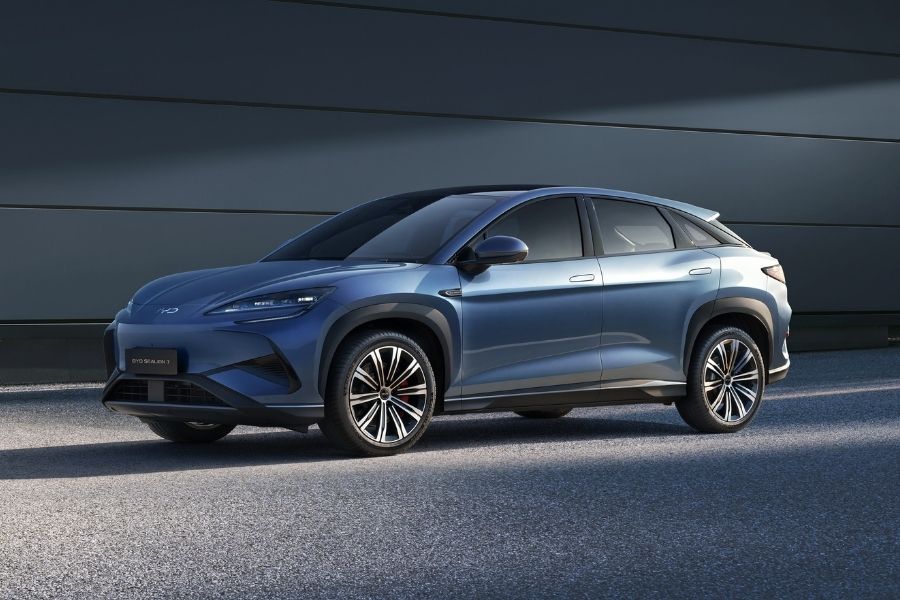
Goodbye Cheap EVs?
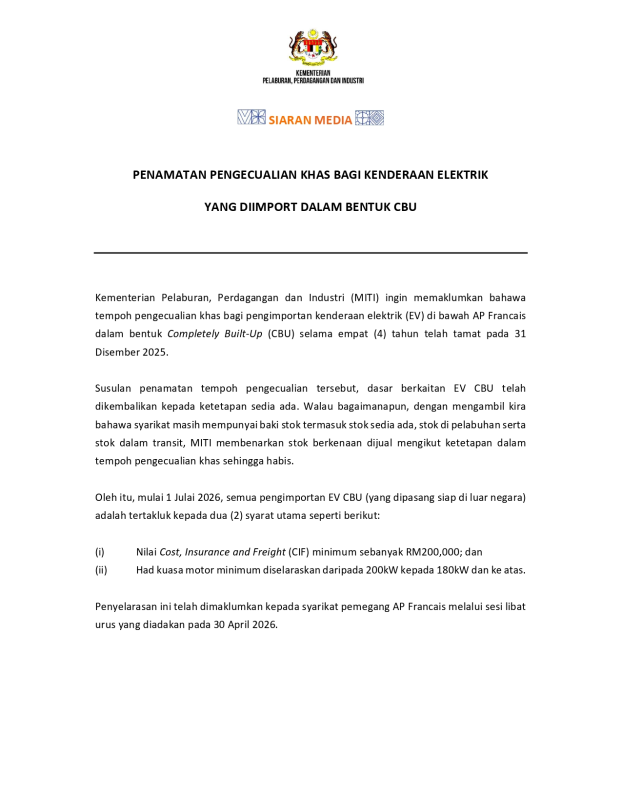
Up until now, we’ve seen a wave of affordable fully-imported (CBU) electric cars hitting Malaysian shores. However, MITI has confirmed that after July 1, no new CBU electric vehicles can be imported with a CIF value of less than RM200,000.
Essentially, the government is setting a “premium floor” for imports. If it’s coming from overseas and it’s cheap, it likely won’t be allowed in its current form.
The Power Limit: It’s not allowed to be “underpowered.” Every imported EV must have a minimum power output of at least 180kW (roughly 245PS). This is why those cute RM40k mini-EVs you see on TikTok aren’t allowed to be sold officially in Malaysia.
The “Franchise Holder” Rule: Only companies with a valid Franchise AP can bring these in. They also have to prove they have the setup to provide after-sales service and spare parts. No “fly-by-night” car sellers allowed!
It might feel like a buzzkill for buyers, but there’s a strategic reason behind it. The government wants to move away from being just a “buyer” nation and become a “maker” nation.
- Boosting Local Assembly (CKD): By making imports more expensive/exclusive, the government is forcing brands to set up factories in Malaysia.
- Job Creation: Local assembly means more jobs for Malaysians and a stronger local automotive ecosystem.
- Protecting Local Players: It gives brands that do invest in local plants, including our national carmakers, a fairer fighting ground.
What happens to the “Budget” EVs?
If you were looking at models like the BYD Dolphin or the Ora Good Cat, don’t panic just yet.
- Existing Stock: Cars already in the country or already approved before the deadline can still be sold.
- The Price Jump: Expect new batches of imported models to either get a spec boost to justify a RM200k price tag or for brands to pivot quickly to local assembly to keep prices down.
If you’ve been waiting for the “perfect time” to jump into the EV world without breaking the RM200,000 mark, your window of opportunity is officially closing. After July 1, the “budget” EV as we know it might just become a thing of the past.
Follow Wah Piang for more.