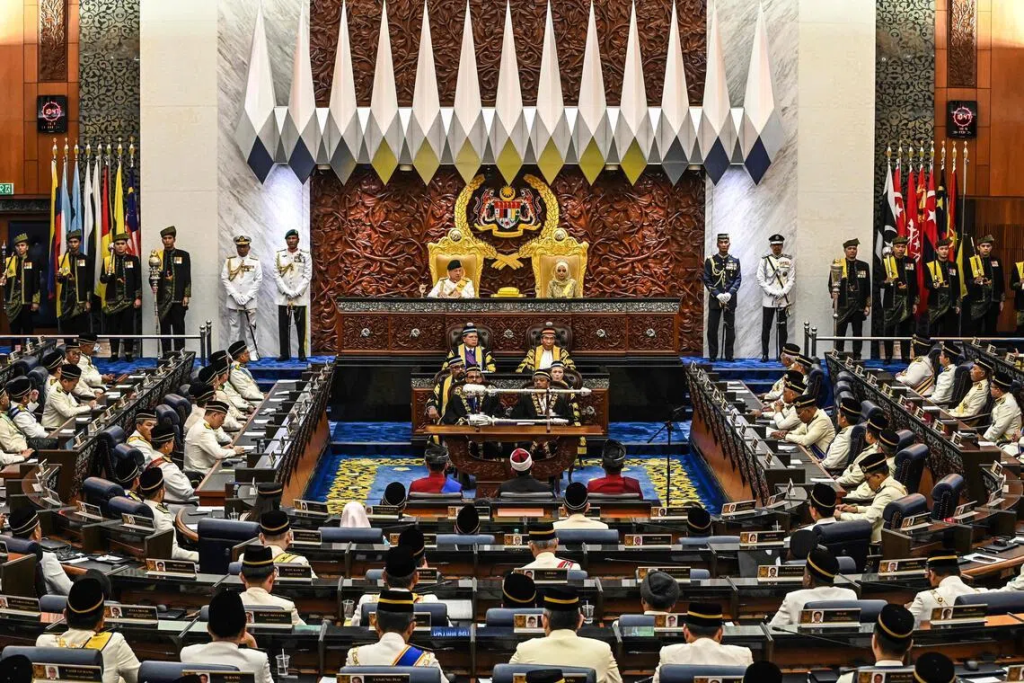
The Dewan Rakyat failed to pass a proposed constitutional amendment to cap the prime minister’s tenure at a maximum of 10 years after it did not secure the required two-thirds majority.
In a bloc vote, 146 MPs voted in favour of the bill, 44 abstained and 32 were absent. The amendment required at least 148 votes to meet the constitutional threshold.
The outcome was announced by Dewan Rakyat Speaker Johari Abdul.
Government absences
Following the vote, deputy speaker Alice Lau said in a Facebook post that eight MPs from the government bloc were absent during the voting session.
She added that all MPs from Pakatan Harapan were present and supported the bill.
Proposed lifetime cap on premiership – time served counted cumulatively
Law and institutional reform minister Azalina Othman Said tabled the Constitution (Amendment) Bill 2026 on Feb 23. The proposal sought to introduce a lifetime 10-year limit on holding the office of prime minister, with time served counted cumulatively — whether in consecutive terms or separate stints.
Under the proposed changes, once the cap is reached, the prime minister and Cabinet would be required to resign but could remain in a caretaker capacity until a successor is appointed.
Prime Minister Anwar Ibrahim had earlier said the limit would apply to him first. Azalina also clarified that former prime ministers who have already served more than a decade would not be eligible for reappointment if the amendment becomes law.
Broad support but concerns raised in parliament
During the debate, MPs from both sides expressed support for the idea of term limits. However, several lawmakers questioned how the 10-year cap would be calculated and how leadership transitions would be managed once the limit is reached.
A total of 41 MPs participated in the debate, which stretched through the afternoon. Many raised the possibility that a fixed-term system might be more workable than a strict cumulative 10-year ceiling.
Debate over royal powers
Opposition MPs, particularly from PAS, voiced concerns that the amendment could encroach on the powers of the Yang di-Pertuan Agong, arguing that the King has the ultimate authority to appoint the prime minister.
Takiyuddin Hassan (PN-Kota Bharu) led arguments on safeguarding royal discretion, calling for clear caveats to ensure the Agong’s constitutional role is not undermined.
They also proposed that, beyond imposing tenure limits, reforms should include a clearer separation between the roles of prime minister and finance minister.
Anwar Ibrahim gave his assurance that the proposed tenure cap would not infringe on the prerogative powers of the Yang di-Pertuan Agong. He said the amendment is intended to strengthen the current system by introducing an added institutional check-and-balance mechanism.
Minister of Law and Institutional Reform Azalina Othman also dismissed assertions that the amendment would diminish the powers of the Yang di-Pertuan Agong or the Malay rulers. She maintained that the proposal merely introduces an additional condition governing the prime minister’s tenure and does not interfere with the monarchy’s constitutional rights.
Calls for broader reform
Syed Saddiq Syed Abdul Rahman (Muda-Muar) argued that the government was putting the cart before the horse by introducing term limits ahead of political financing laws, which he said are urgently needed to prevent politicians from becoming overly reliant on wealthy backers.
Meanwhile, William Leong (PH-Selayang) noted that imposing a constitutional term limit would represent a significant departure from the Westminster system, where prime ministers typically serve without fixed tenure limits and can be removed through no-confidence motions or loss of party support.
He described the proposed amendment as “brave and progressive”, adding that if passed, Malaysia would have been among the first Commonwealth nations to constitutionally cap the prime minister’s tenure.
Follow Wah Piang for more.